A lot of people think interior car detailing is just a fancy vacuum and a wipe down. It is not. Professional interior detailing is a systematic process that cleans, sanitizes, and restores every surface inside your vehicle. Here is what is actually included, what it costs, and how to know when you need it.
What Professional Interior Detailing Actually Includes
A proper interior detail covers every surface inside the cabin. It starts with a thorough vacuum of all seats, carpets, floor mats, trunk, and crevices — including between and under seats where dirt, crumbs, and debris accumulate. We use compressed air to blow out dust from vents, buttons, and tight gaps that a vacuum cannot reach.
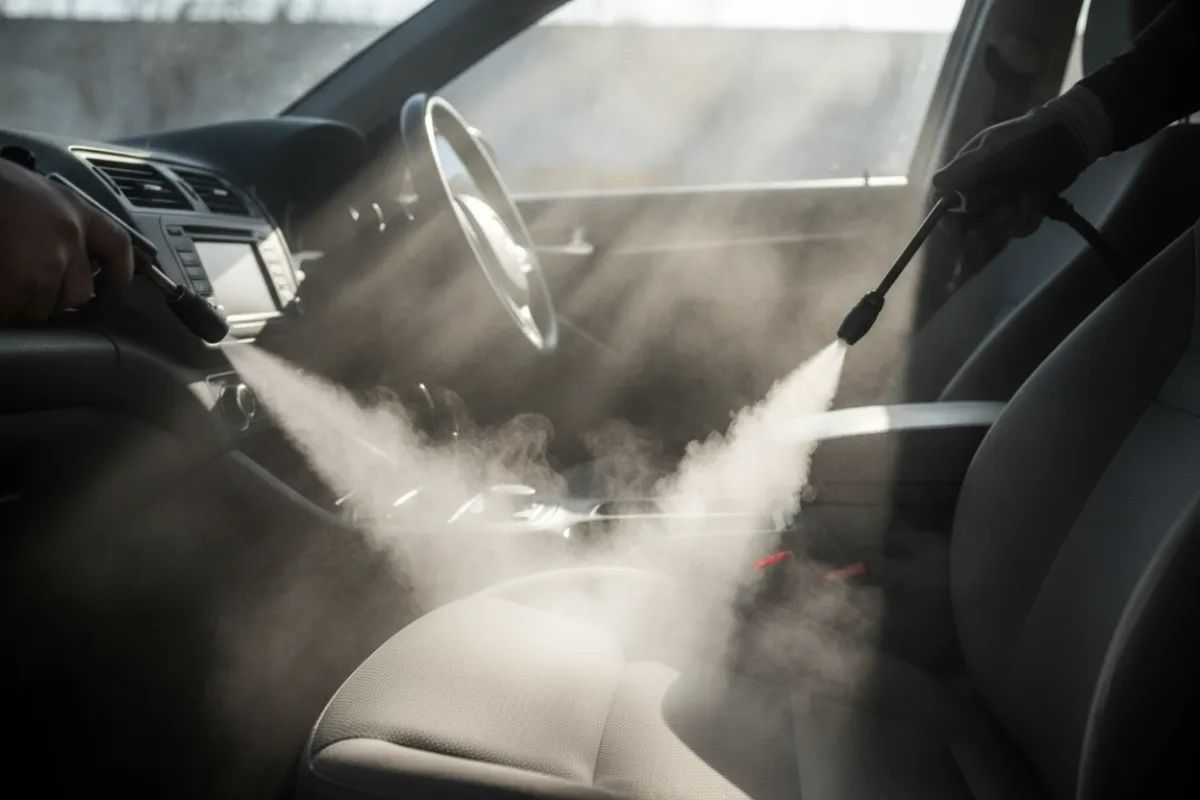
Next comes steam cleaning. We use a commercial steamer at 300+ degrees on hard surfaces — dashboard, centre console, door panels, cup holders, steering wheel, and shift knob. Steam kills bacteria, loosens grime, and cleans without chemicals. This is especially important for high-touch areas like the steering wheel and door handles.
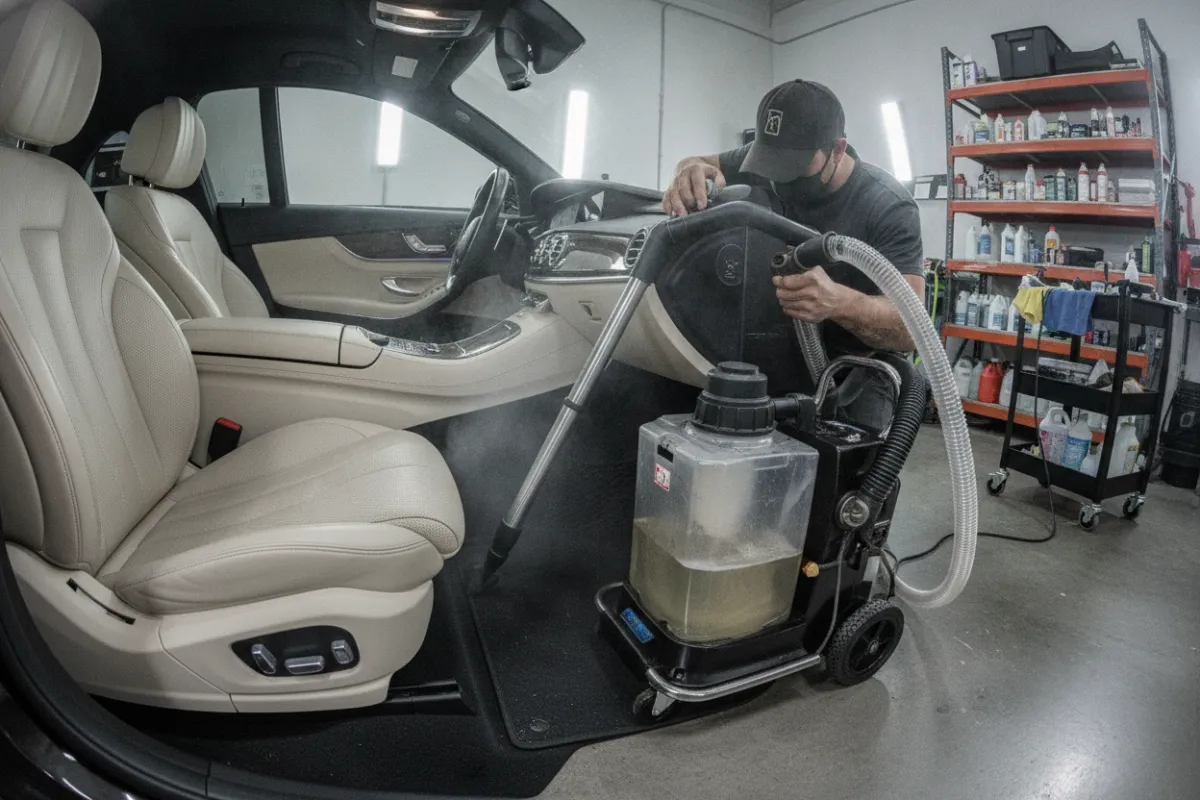
For fabric seats and carpets, we use a hot water extractor. This machine injects cleaning solution deep into the fabric and immediately suctions it out along with dirt and stains. It is the only way to truly clean fabric — surface wiping does not remove what is embedded in the fibres. For leather seats, we use a pH-balanced leather cleaner followed by a leather conditioner to prevent cracking and drying.
We finish with interior glass cleaning (streak-free), trim dressing on plastic and vinyl surfaces, and a final wipe down of all touchpoints. The result is a cabin that looks, feels, and smells like it just rolled off the lot.
When Do You Need Interior Detailing?
After winter is the most common time. Road salt tracked in from boots leaves white stains on carpets and floor mats. Salt is corrosive and will damage fabric and rubber if left untreated. A post-winter interior detail removes all salt residue and restores your carpets. In Scarborough and the GTA, we see a big rush for this service every March and April.
If you have kids or pets, interior detailing every 3-4 months keeps things manageable. Kids drop food, spill drinks, and leave fingerprints everywhere. Pets shed hair that embeds in fabric and leave dander that can trigger allergies. Regular detailing prevents buildup from becoming permanent.
Buying a used car is another common trigger. You do not know what the previous owner did in that car. A full interior detail and ozone treatment gives you a fresh start and eliminates any lingering odours.
Standard Detail ($149) vs. Deep Clean ($249)
Our standard interior detail at $149 covers everything described above — vacuum, steam clean, extraction, leather or fabric care, glass, trim dressing. This is the right choice for vehicles that are reasonably maintained and just need a thorough cleaning. Most customers fall into this category.
The deep clean at $249 is for vehicles that need more work. This includes multiple rounds of extraction for heavily stained seats or carpets, headliner cleaning, full HVAC treatment, and ozone odour elimination. If your car has been through a winter without interior cleaning, has pet hair embedded in every surface, or has a persistent smell, the deep clean is what you need.
How Long Does It Take?
A standard interior detail takes 2-3 hours. A deep clean takes 3-4 hours, sometimes longer if the vehicle requires multiple extraction passes or extended ozone treatment. We do not rush the process — cutting corners on drying time or extraction leads to mildew and damp carpet, which defeats the purpose.
DIY vs. Professional — What You Can Do at Home
There are things you can do at home to maintain your interior between professional details. Regular vacuuming — once a week if possible — prevents dirt from grinding into fabric. Wiping down the dashboard and steering wheel with a damp microfibre cloth removes dust and fingerprints. Using rubber floor mats in winter protects your carpets from salt.
What you cannot do at home is deep extraction. A consumer-grade carpet cleaner does not have the suction power or water temperature of a commercial extractor. You also cannot steam clean effectively without a commercial steamer, and ozone treatment requires specialized equipment that should not be used without proper ventilation knowledge.
Leather vs. Cloth Seats — Different Approaches
Leather and cloth seats require completely different products and techniques. Cloth seats absorb spills and stains — they need extraction to pull contaminants out of the fibres. Leather seats do not absorb the same way, but they dry out and crack without conditioning. Using the wrong products on leather — like all-purpose cleaners or bleach-based products — can strip the protective coating and cause permanent damage.
We use pH-balanced cleaners specifically formulated for automotive leather. After cleaning, we apply a leather conditioner that restores moisture and flexibility. For cloth seats, we use enzymatic cleaners that break down organic stains without leaving residue. The right products make a significant difference in results and in protecting your interior long-term.
How to Maintain Your Interior Between Details
Keep a small microfibre cloth in your glovebox for quick wipe downs. Shake out your floor mats every time you fill up gas. Do not eat in your car if you can avoid it — food particles attract bacteria and create odours over time. If you spill something, blot it immediately with a clean cloth rather than rubbing, which pushes the stain deeper into the fabric.
For leather seats, apply a conditioner every 2-3 months, especially if your car sits in direct sun. UV exposure dries out leather faster. Parking in shade or using a windshield sunshade helps extend the life of both leather and dashboard plastic.
Beyond Detail is located in Scarborough and serves the entire GTA including Toronto, Markham, Pickering, and Ajax. Whether you need a standard interior refresh or a deep clean after winter, we have you covered. Call us at (647) 689-6109 or book online. Same-day service is often available.