PPF & Paint Protection Film
Scarborough
Physical protection against rock chips, road debris, and scratches. XPEL and Legend Films installed at our 170 Finchdene Square studio. The highest tier of paint protection — a step above ceramic coating.
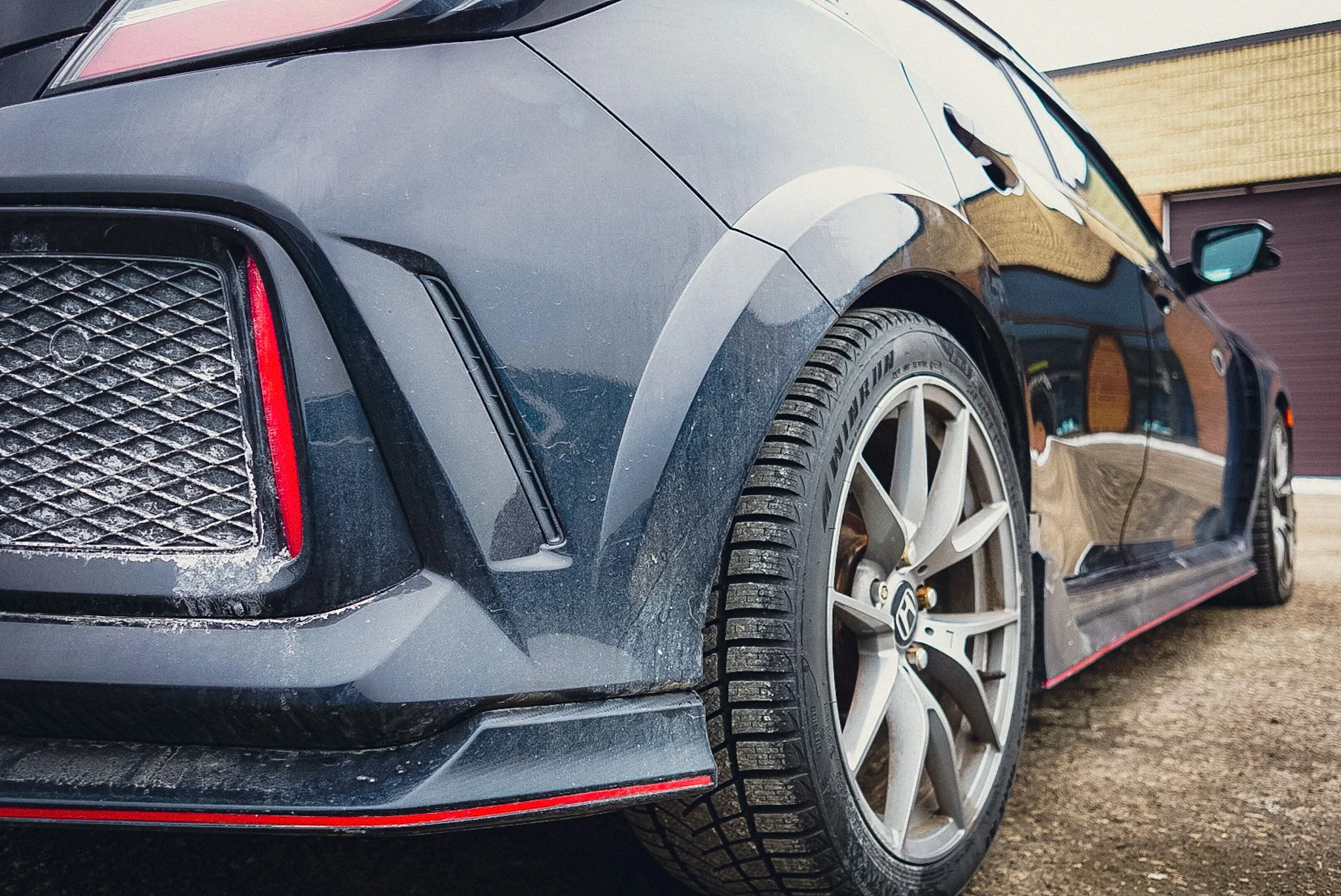
Why Paint Protection Film?
Rock Chip Protection
Physical barrier absorbs impacts from gravel, road debris, and stone chips that ceramic coating cannot stop.
Self-Healing
Light surface marks from car washes and minor abrasion disappear with heat on self-healing film.
Optically Clear
Professionally installed film is invisible — it preserves the original look of your paint.
XPEL & Legend Films
Two professional-grade film brands available at our Scarborough studio.
All Coverage Options
Partial front, full front, or full body — matched to your vehicle and driving pattern.
Top-Tier Protection
PPF is the highest level of paint protection available. A step above ceramic coating for physical defense.
Our PPF Installation Process
Paint Assessment
We inspect the existing paint condition and measure clear coat thickness. Any paint defects are addressed before film goes on.
Surface Preparation
Full decontamination wash, clay bar, and panel wipe-down. The film bonds to a perfectly clean surface.
Pattern Cutting
Film patterns are computer-cut to match your vehicle's exact panel dimensions — no bulk trimming on the paint.
Film Application
Applied panel by panel in our controlled studio environment. Each section is squeegeed and edge-sealed.
Cure Period
The film adhesive fully cures in our studio before pickup. We advise on the initial care window.
Quality Check
Full inspection under bright lighting for edge adhesion, coverage gaps, and surface clarity before handover.
Paint Protection Film FAQs
What is paint protection film?
+
Paint protection film (PPF) is a clear, durable urethane film physically applied over your vehicle's paint. It absorbs impacts from rock chips, road debris, and scratches that would otherwise damage the clear coat or paint. Many films are self-healing — light marks vanish with heat.
PPF vs ceramic coating — which do I need?
+
They protect against different threats. Ceramic coating is excellent chemical protection (salt, UV, bird droppings) but will not stop a rock chip. PPF is a physical barrier that stops chips and scratches. For highway commuters in Scarborough, a partial front PPF combined with ceramic coating on the rest of the vehicle covers all bases.
What brands do you install?
+
We install XPEL and Legend Films — both professional-grade products applied at our 170 Finchdene Square studio.
What coverage options are available?
+
Partial front (bumper, partial hood, fenders, mirrors), full front, or full body. We assess your vehicle and driving pattern before recommending the right coverage level.
How much does PPF cost?
+
Pricing varies by vehicle size, paint condition, and coverage area. We do not quote without seeing the car. Contact us for a free consultation at (647) 689-6109.
Can PPF be combined with ceramic coating?
+
Yes — and it is the recommended combination. PPF on the high-impact front zones handles rock chips and physical damage. Ceramic coating over the PPF and on the rest of the vehicle handles chemical protection, UV, and makes everything easier to wash.
GET A FREE PPF CONSULTATION
Pricing depends on your vehicle and coverage area. Contact us to schedule a free assessment at our Scarborough studio.
What Is Paint Protection Film?
If you searched “PPF near me,” here's what that means at a Scarborough studio that installs it every week. Paint protection film (PPF) is a clear, durable urethane film physically bonded to your vehicle's painted surfaces. Unlike ceramic coating, which bonds chemically to the clear coat, PPF is a physical layer that sits on top of the paint and absorbs impacts from rock chips, road debris, scratches, and abrasion. When a stone hits a PPF-covered panel, it strikes the film instead of your paint. Many premium PPF products are also self-healing — minor surface marks from keys, car washes, and light abrasion disappear with heat, either from the sun or warm water. The film is optically clear when properly installed, preserving the original appearance of your paint.
At Beyond Detail, we install XPEL and Legend Films at our 170 Finchdene Square studio in Scarborough. Both are professional-grade products installed by trained technicians using precision cutting and application techniques.
PPF vs Ceramic Coating: The Honest Comparison
Ceramic coating and paint protection film protect against completely different threats, and the best protection strategy often combines both.
Ceramic coating chemically bonds to your clear coat and provides outstanding chemical resistance — road salt rinses off, bird droppings sit on the hydrophobic surface instead of etching, UV gets blocked, and the paint stays significantly cleaner between washes. What ceramic coating cannot do is stop a rock chip. A stone travelling at highway speed has enough kinetic energy to cut right through a ceramic layer into the clear coat and paint beneath.
Paint protection film is a physical barrier. A rock hits the film, the film deforms and absorbs the energy, and the paint underneath is untouched. The film handles the mechanical threats that ceramic coating cannot. For Scarborough and GTA daily drivers doing highway miles on the 401, the DVP, and the 404, a partial front PPF package is the most direct answer to the stone chip problem. Ceramic coating on the rest of the vehicle handles the chemical and UV threats. Together, the two cover the full range of hazards a daily driver faces in Ontario.
For the full breakdown — real pricing, install order if you want both, and which one fits your driving pattern — see our ceramic coating vs. PPF guide.
Coverage Options
Paint protection film is applied to specific coverage zones based on where your vehicle takes the most damage and how comprehensive you want the protection to be.
Partial front covers the front bumper, partial hood (leading edge and hood impact zone), front fenders, and side mirrors. This is the highest-impact zone on any vehicle — where rock chips from the vehicle ahead hit first and where stone damage is most concentrated. For most Scarborough daily drivers, a partial front is the best starting point.
Full front extends coverage across the full hood, full front fenders, full bumper, mirror caps, and sometimes the A-pillars. This is the right choice for newer vehicles or for owners who want comprehensive protection of every painted surface that faces forward.
Full body covers every painted exterior surface. This is the ultimate protection level and is typically chosen for high-value vehicles, luxury cars, exotics, or owners who want to keep a vehicle in showroom condition long-term. It is also the right choice if you want to protect a wrap.
Every PPF installation at our Finchdene Square studio includes a full paint assessment and consultation before we quote. We look at the vehicle's paint condition, the areas that have already taken damage, and what your driving pattern looks like, and we recommend the coverage that makes sense for your situation.
The Films We Install: XPEL and Legend Films
We keep two professional-grade film lines at the studio: XPEL and Legend Films. Both are urethane films built for automotive paint, both are optically clear once installed, and both are cut from digital patterns rather than trimmed by hand on your panels. Which one goes on your car depends on the coverage you want, the panel shapes we are working with, and pattern availability for your year, make and model. We tell you which film we are putting on your vehicle before we start, not after.
Neither of these is a retail product you buy off a shelf and apply in a driveway. Film this thick needs to be stretched, heat-formed around curves, and edge-sealed while the adhesive is still workable. That is the part that separates a good install from one that lifts at the bumper corners in the second winter. We do every install in the bay at 170 Finchdene Square, with the doors closed, because a piece of grit landing under the film during application is permanent.
If you want the specific performance figures for either film, ask us and we will show you the manufacturer's own literature rather than repeat numbers here. We would rather you read the spec from the company that makes the film.
How We Install Paint Protection Film
A PPF install is a full day or more of work, and most of it happens before any film comes off the roll. Here is the sequence we follow on every vehicle.
Paint assessment. We inspect the paint you already have and measure clear coat thickness before committing to anything. This matters more than most people expect. Film is transparent, so whatever is under it stays visible for as long as the film is on the car. Swirl marks, wash scratches, oxidation and old chips all get locked in. If the paint needs correction first, we say so at this stage and quote it separately, because correcting under film later means removing the film.
Surface preparation. The vehicle gets a full decontamination wash, then clay bar, then a panel wipe-down. Adhesive bonds to what is actually on the surface, so anything left behind, from iron fallout to old wax, becomes a weak spot. This step is slow and it is not optional.
Pattern cutting. Film patterns are computer-cut to your vehicle's exact panel dimensions. Nothing is trimmed with a blade against your paint. Bulk-trimming on the car is how installers leave knife marks in a clear coat, and it is why we cut off the vehicle.
Film application. The film goes on panel by panel in our controlled studio bay. Each section is squeegeed out to push the slip solution and air from underneath, then the edges are sealed so the film wraps rather than stopping flat on the surface where dirt can work under it. Curved panels are heat-formed to sit properly instead of being forced into position.
Cure period. The adhesive keeps curing after the film is down. The vehicle stays in the studio until that is far enough along to hand over safely, and we tell you what the first care window looks like before you drive away.
Quality check. Last step is a full inspection under bright shop lighting: edge adhesion, coverage gaps, lifted corners, trapped debris, surface clarity. We walk you around the car under the same lighting before the keys go back, so you see what was done and where the film starts and stops.
Living With Paint Protection Film
PPF is low-maintenance, not no-maintenance. The care is straightforward and mostly a matter of not doing the few things that shorten a film's life.
Leave the car alone through the initial care window we give you at handover. The adhesive is still setting, and washing too early is the most common way owners create edge lift on an otherwise clean install.
After that, hand washing is the safest routine. Automatic washes with spinning brushes are hard on film edges, and a pressure washer held close to a seam can get under the film and start peeling it. If you use a pressure washer, keep the nozzle back and off the edges. Wash top-down, use clean mitts, and dry with soft towels the same way you would treat good paint.
Self-healing film handles light marks on its own. Fine scuffs from a car wash or a careless sleeve across a fender close up with heat, either from sitting in the sun or from warm water over the panel. This is a real property of the film and not a claim about scratch-proofing. A deep gouge that goes through the film is still a deep gouge, and the fix is replacing that section.
Ceramic coating over PPF is the combination most of our film clients end up with. The coating sits on top of the film, keeps it hydrophobic, and makes the whole car easier to wash. It also means road salt and bird droppings sit on a slick surface rather than working into the film. We can apply the coating over new film or over film that is already on the vehicle.
Film does have a service life. It is a wear layer, and wear layers are meant to be consumed. When a section has taken enough damage that it no longer looks right, that section comes off and a new one goes on, and the paint underneath is still the paint you drove in with. That is the entire point of the product.
When PPF Is Worth It, and When It Is Not
We would rather talk someone out of a package they do not need than sell it and have them wonder later.
PPF is usually worth it if you commute on the 401, the DVP or the 404, if your car is new or close to it, or if the paint is a colour where chips show badly. Dark blues, blacks and reds make every stone strike obvious. It is also worth it if you plan to keep the car for years, because the cost of film is fixed and the cost of repainting a chipped hood is not. Leased vehicles are a good fit too, since the film comes off at the end and the panel underneath has not been touched.
PPF is a harder case if the front end is already covered in chips. Film is clear, so it preserves whatever it goes over. In that situation the honest sequence is paint correction or paint repair first, then film, and that is a bigger budget conversation than most people expect walking in. It is also a harder case on a car that rarely leaves city streets at low speed, where the stone-chip exposure that justifies the film is simply not there. And if you are selling the car in a few months, the money is better spent on a detail and a ceramic coating than on film you will not own long enough to benefit from.
One thing film does not do is replace ceramic coating. It stops physical damage. It does not make the paint chemically resistant across the whole car, and the panels without film are still exposed to salt, UV and etching. If your main concern is winter road salt rather than rock chips, start with ceramic coating and add film to the front later.
Why Scarborough and GTA Vehicles Need PPF
The GTA highway network is one of the hardest environments for vehicle paint in Canada. The 401 is one of the busiest highways in North America, and the combination of heavy truck traffic, construction gravel, road surface debris, and stop-and-go conditions creates constant rock chip pressure on any vehicle doing regular highway commutes. Scarborough specifically sits at a highway interchange with multiple on-ramp merges where debris kicked up by transport trucks is unavoidable.
Stone chips compound over time. A single chip is cosmetic. A hood covered in chips after three years of commuting is a paint repair bill, rust risk, and a car that looks several years older than it is. PPF on the front sections eliminates that accumulation entirely. The film wears, not the paint.
Get a Free PPF Consultation
Paint protection film is a precision installation that requires an assessment before any accurate quote can be given. Pricing depends on your vehicle, the condition of the existing paint, and the coverage area you choose. We do not quote blind. For typical price ranges by coverage, see our paint protection film cost guide for Toronto. Call (647) 689-6109 or use our contact page to schedule a free consultation at our 170 Finchdene Square, Unit 11 studio in Scarborough. We are open Monday through Saturday (closed Sundays) and respond to messages within the same business day.