Window tint laws in Ontario confuse a lot of people. Some drivers think any tint is illegal. Others assume they can go as dark as they want. The reality is somewhere in the middle, and knowing the rules can save you a fine and a failed safety inspection. Here is what you need to know in 2026.
Ontario Window Tint Law — The Basics
Start with the part most tint pages get wrong. The Highway Traffic Act does not contain a tint percentage anywhere. Section 73(2) makes it an offence to drive with the windshield or any window coated so as to obstruct the driver's view of the road. Section 73(3) covers the windshield and the windows directly to the left or right of the driver's seat, and the test there is whether the coating substantially obscures the interior of the car when someone looks in from outside. Section 74(1) says the windshield and the front side windows have to be in a condition that gives the driver a clear view to the front and side. Those are judgment calls, not numbers.
The 70% figure is real, but it lives somewhere else: the Ministry of Transportation's Passenger/Light-Duty Vehicle Inspection Standard, which is what a licensed station inspects against before it issues a safety standards certificate. For any vehicle built on or after January 1, 2017, that standard tells the inspector to reject the car if light transmittance is under 70% on any window directly to the left or right of the driver. Transmittance is measured through the glass and the film together, so your factory glass counts toward the number. Most factory side glass already sits close to 70% on its own, which is why there is very little room to add film up front and still measure 70%.
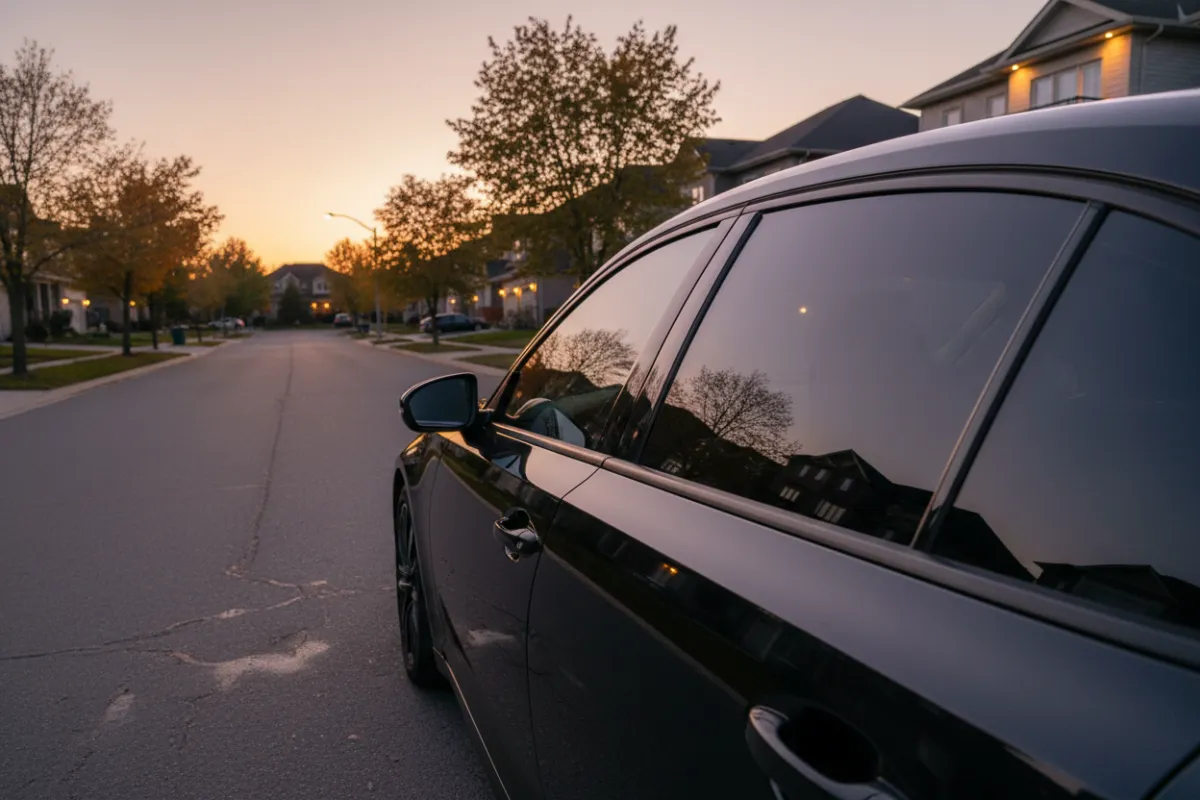
Rear side windows and the rear windshield have no transmittance number in the inspection standard, and Section 73(3) does not reach them. That is why you see so many cars with dark rear glass and near-clear fronts, and it is work we do every day. It is not a total free pass. Sections 73(1) and 73(2) apply to any window on the car, so film that blocks the driver's own view can still be charged, and Section 74(1)(b) wants a clear view out the back unless the car has side mirrors that give the driver a clear reflected view behind. Almost every car does, so in practice dark rear glass is fine.
The windshield is the strictest glass on the car. The only windshield film the inspection standard allows is a strip across the top: no more than 75 mm down from the top edge, not past the AS line marked on the glass, and still passing 70% transmittance. For vehicles built on or after January 1, 2017 the standard goes further and rejects any aftermarket film on the windshield at all, including that strip. A fully tinted windshield is not street legal in Ontario at any shade, and that includes clear heat-rejection film.
We do install full-windshield film when a customer asks for it, usually LLumar AIR 80, which is close to invisible. We are straight about what it is. It is not street legal in Ontario, it can be ticketed under Section 73 or 74, and it can fail a safety inspection. If you want it, the tickets, fines, and any removal order are yours to carry. You will hear that from us before the job starts, not after.
What VLT Percentages Actually Look Like
VLT percentages can be confusing because a lower number means darker tint. Here is what each level looks like in practice. 5% VLT is limo tint — nearly impossible to see through from outside, very dark inside. This belongs on rear glass only. 15% VLT is a dark tint where you can barely see inside. Popular on rear windows for privacy. 20% VLT is slightly lighter than 15%, still provides strong privacy. A common choice for rear windows across the GTA.
35% VLT is a medium tint that lets you see inside if you look closely. It is a popular pick for front sides and it is also far below the 70% an inspector looks for, so it is not a grey area. It is a shade that can be ticketed and can fail a safety inspection. 50% VLT is a light tint — noticeable but subtle. Provides UV and heat protection without changing the look much. 70% VLT is nearly clear and is the transmittance the inspection standard looks for on front side windows. Ceramic film at 70% VLT still blocks significant infrared heat.
What Happens If You Get Pulled Over
If a police officer decides your front tint is too dark, they can write an HTA ticket. The set fine for each of these offences is $85 on the Ontario Court of Justice schedule, which comes out around $110 once the $5 court costs and the victim fine surcharge are added. Fight it and lose and a justice can set a higher amount. An officer can also issue a vehicle inspection order, which means taking the car to a licensed station and having the film removed or replaced to pass. That adds removal, re-tinting with a compliant film, and the inspection fee.
In practice, enforcement varies, because there is no percentage in the Act for an officer to measure against. What they are deciding is whether they can see into the car and whether your own view is clear. Some carry a meter, many do not. Either way, dark film on the front glass is a gamble that can cost you time and money.
Medical Exemptions
A lot of tint pages say Ontario grants medical exemptions for darker front glass. We cannot find the program behind that claim, so we are not going to repeat it. Sections 73 and 74 of the Highway Traffic Act contain no medical exception, and the Ministry of Transportation's inspection standard does not list one either. If you have a medical reason for darker glass, ask MTO directly before you spend money on film, and get whatever they tell you in writing.
Our Recommendation
For most customers in Scarborough and the GTA, the setup that keeps you out of trouble is 70% VLT ceramic on the front side windows and 15-20% on the rear windows and back windshield. The front stays inside what an inspector is looking for and the ceramic still does the heat work. The rear gives you the privacy and the temperature drop. Prices and what to expect are in our Scarborough window tinting cost and VLT laws guide.
Plenty of people want 35% up front instead, and we will install it. What we will not do is call it legal. 35% on the front sides sits well under the 70% transmittance the inspection standard asks for, it can be charged under Section 73 or 74, and it can fail a safety inspection. If that is the look you want, the tickets, fines, and any removal order are on you. Say the word and we will book it.
Why Ceramic Film Matters More Than Percentage
The type of film matters more than the darkness level when it comes to heat rejection. Cheap dyed films might look dark but they do very little to block heat. They also fade to purple within a year or two. Carbon films are a step up and provide decent heat rejection without the fading issue.
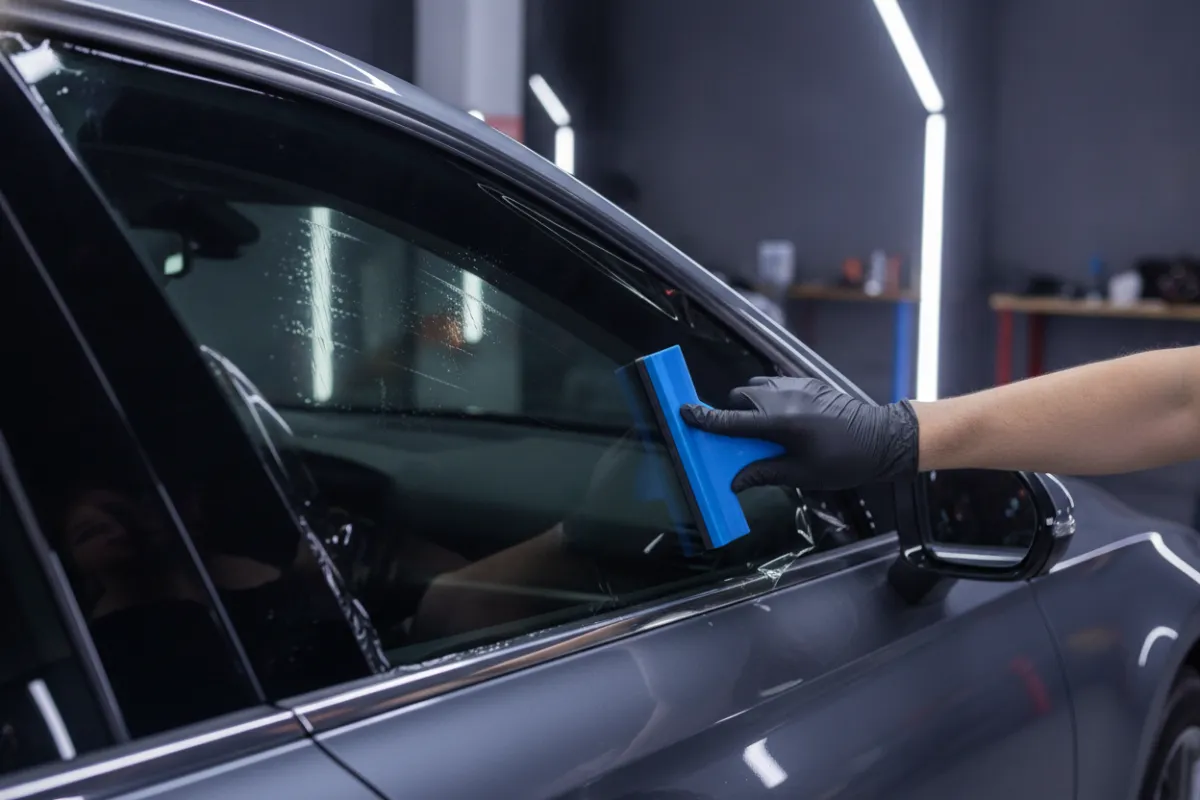
Ceramic film is the top tier. It uses nano-ceramic particles to block infrared heat without needing to be dark. A 70% VLT ceramic film rejects more heat than a 20% VLT dyed film. That means you can keep your front glass inside the standard and still keep the car significantly cooler in the summer. At Beyond Detail, we exclusively install ceramic window film because it performs better and lasts longer.
If you are considering window tint for your vehicle in Scarborough or anywhere in the GTA, give us a call at (647) 689-6109. We will walk you through the options, show you film samples, and help you choose the right setup for your vehicle and your needs. We also offer tail light tinting for the rear lamps.